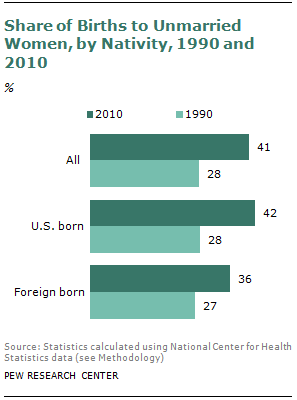
Overall, 41% of births in the U.S. were to unmarried mothers in 2010. The share is higher for births to U.S.-born mothers (42%) than to foreign-born mothers (36%).
These differences are explained in part by the greater likelihood of immigrants to be married, which also is the case within each major racial and ethnic group. Among all women ages 15-44, 56% of immigrants are married, compared with 36% of U.S.-born women.
Of all births in 2010 to unmarried women, 20% were to immigrant mothers. Among married mothers, 25% of births in 2010 were to immigrant women.
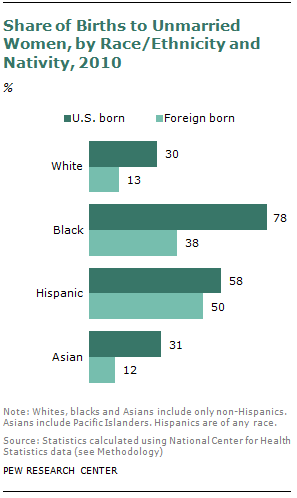
The share of births to unmarried mothers differs markedly by racial and ethnic group. Overall, the share is highest among black women, followed by Hispanics, whites and Asians. But those rankings differ between foreign-born and native-born mothers.
Looking at births to foreign-born mothers by race and ethnicity, the highest share to unmarried mothers is among Hispanics (50%), followed by blacks (38%), whites (13%) and Asians (12%). Among births to U.S.-born women, the highest share to unmarried mothers is among blacks (78%), followed by Hispanics (58%), Asians (31%) and whites (30%).
The share of births to unmarried women has risen since 1990, when it was 28% overall. At that time, the non-marital share of births was similar for immigrant (27%) and U.S.-born women (28%). Since then, however, the share of immigrant women of childbearing age who are unmarried has changed little (rising to 44% from 41%). The share of U.S.-born women of childbearing age who are unmarried has risen markedly—by 14 percentage points—since 1990, when it was 50%.
However, because the number of births to immigrant women has grown more rapidly since 1990 than the number of births to U.S.-born women, immigrant mothers now account for a larger share of births to unmarried mothers than in the past. Of all births to unmarried women, 20% in 2010 were to foreign-born mothers, up from 15% in 1990.
The share of births to unmarried mothers has risen since 1990 for virtually all racial and ethnic groups, both foreign born and native born. The only exception among the major groups was births to foreign-born black women, of which 44% were to unmarried mothers in 1990, compared with 38% in 2010.


